Listen
reflections on God as a good listener

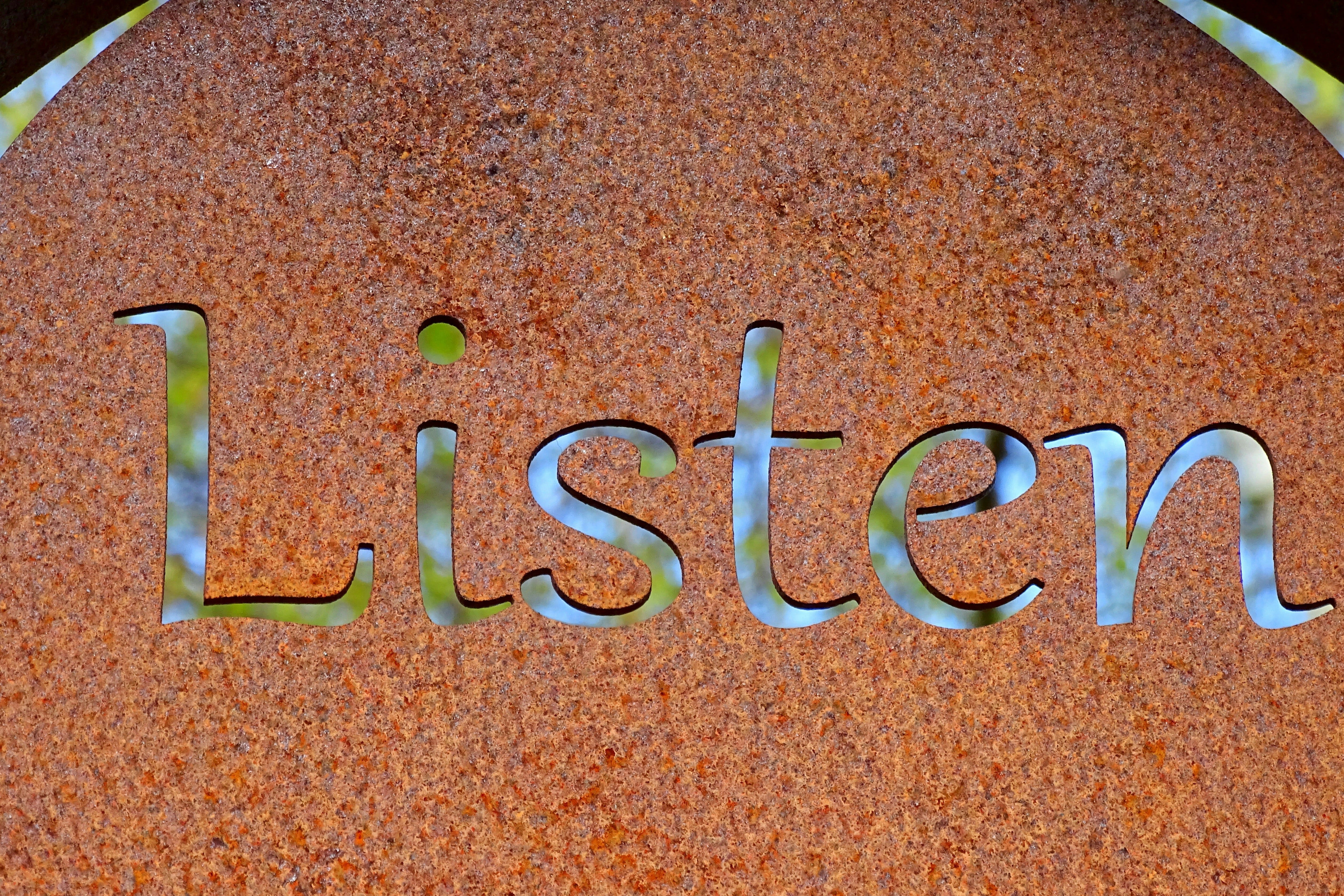
Never before in history has humanity experienced so much talking and so little listening. Facebook was made available to the general public in September 2004. As of today, there are approximately 3 billion daily active users who post about 293,000 status updates every minute. That’s about 422 million posts per day. Meanwhile, on X, there are an estimated 500 million posts per day. Add another 95 million Instagram posts each day, and just three of the leading social media platforms around the world facilitate a grand total of over 1 billion posts per day. Yes: per day.
With all this communication going on, you would think the world would be in better shape than it is…and yet…it is arguable that our society has never been more divided. How humbling it is that there is so much talking yet so little listening. It is as if billions of people are crying out day-by-day, minute-by-minute, to be heard…but no one is listening. Year after year, the fevered pitch only seems to intensify. Is anyone really listening?
Many years ago, Henri Nouwen spoke to this sad reality when he wrote:
“Over the last few decades we have been inundated by a torrent of words. Wherever we go we are surrounded by words: words softly whispered, loudly proclaimed, or angrily screamed…words on records, in books, on walls, or in the sky…words to be heard, read, seen, or glanced at…Words, words, words! They form the floor, the walls, and the ceiling of our existence.
“All this to suggest that words…have lost their creative power. Their limitless multiplication has made us lose confidence in words and caused us to think, more often than not, ‘They are just words.’
“The result of this is that the main function of the word, which is communication, is no longer realized. The word no longer communicates, no longer fosters communion, no longer creates community, and therefore no longer gives life.” (from The Way of the Heart)
So much talking, so little listening. So much communication, so little communion and community. Against this backdrop, we have a portrait in Scripture of a God who listens and sees us truly in love. We catch a glimpse of this in Genesis 16, when Hagar gives the very first nickname in the Bible to God. The story goes that Hagar, who was pregnant at the time, was fleeing a situation where she had become an object of scorn to her mistress, Sarai. As Hagar fled through the desert, she came to a spring where God met Hagar in her distress. There, God assured Hagar that God would care for her and her child. To remind her of this, God told Hagar to name the child Ishmael, which means “God hears.” Hagar then reciprocated by giving a nickname to God: El Roi, which means “God sees.”
It is because God listens that we can say we are seen, truly seen by God. This image of a God who listens and sees would play a vital role in how God’s people would understand God and even themselves. In time, God revealed God’s very name to God’s people as Yahweh. But because we are commanded not to misuse God’s name, whenever Yahweh appears in Scripture, it is common among the Jewish community to use the expression “Hashem” instead (which literally means “the Name”). This, in turn, came to define the Hebrew people…for the word “Semitic” literally means “of the Name.” The Semitic people, then, are a people “of the Name.”
Now, what’s interesting about this is that the word “name” in Hebrew (which is Shem) is closely related to the word “listen” or “hear” in Hebrew (which is Shema). You can hear it and see it: Shem…Shema. Name…Listen. Shem…Shema. They are more closely related than we realize because, in written Hebrew, there are no vowels, only consonants. This means that in instances where we read the word “shem” (or “name”) it could also be read as “shema” (or “listen”)…and vice-versa. It is the context that clarifies which word is meant…but sometimes the context can support either meaning.
Take Genesis 16, for example—a text where we see God listening, seeing, and naming…and Hagar reciprocates. Ishmael’s name, then, could mean both “God listens” and “God names” (or, even, God’s name). A similar example happens in I Samuel 1, when God hears Hannah’s cries and grants her a son, who would be named “Samuel”…which can be rendered either as “Shem-el” (God’s Name) or “Shema-el” (God listens).
This dynamic also plays out in the central creed for God’s people, found in Deuteronomy 6. In this text, the Israelites are commanded to “hear” that Yahweh (or Hashem) is a God of love who commands us to live in love. It is no mistake today that the central creed of the Hebrew people is a creed that reminds us to love the Name (Hashem) by listening (Shema). Notice that as the people live out the ethic of listening, they will live out the command to love. And, as they do this, they will embody their core identity and reflect God’s very nature in their life together.
This is why PlayWell Communities (the faith network I serve) includes “listening” as one of our core practices. It is because God listens and, when we listen, we are imitating God. In other words, listening is a way to revere God’s very Name and to embody the very nature of Hashem. As we see in Genesis 16, to truly listen is to see, to bear wordless witness to the heart of another and, ultimately, to the heart of the God who sees and listens.
Is it any wonder that Jesus says again and again, “Whoever has ears, let them hear”? Far from just a throwaway line, Jesus is calling God’s people (people of Hashem, the Name) to return to our core identity as Listeners (people of Shema).
How little we see of this, though, among Christians in our society! Sadly, we are not known as a people who listen to the cries of others. Instead, we are known as those who double-down, stubbornly offering excuses to justify ourselves and the choices we have made. Rather than holding space for others in a spirit of compassion and empathy, we are driven merely to defend ourselves. This is what we see on social media each and every day…resulting in an environment where there is so much talking, but so little listening.
But, if we have ears to hear, we can hear Jesus cutting through all the noise. He repeats, again and again, refusing to relent: “Whoever has ears, let them hear.” So, dearly beloved: as those who have been given ears by our Creator, let us be known as those who listen. Let us live according to our true identity as followers of a God who listens, Hashem of Shema. Amen and amen.
……………………….
listen
reflections by rev. troy cady